
“Our history illuminates the present.”
Faith Baptist Church, Hamilton, New Jersey
1979-2016
I would be remiss not to mention the years of labor that preceded my arrival at Faith Baptist Church in 1979. Dick Nelson, George Elliiot, and Jack Lee spent their time, devotion, and energy building a ministry that would impact Hamilton, New Jersey!
Pastor Lee led and ministered at FBC for 13 years before I arrived.
So many essential elements of an effective church were already in place in 1979 . . . .
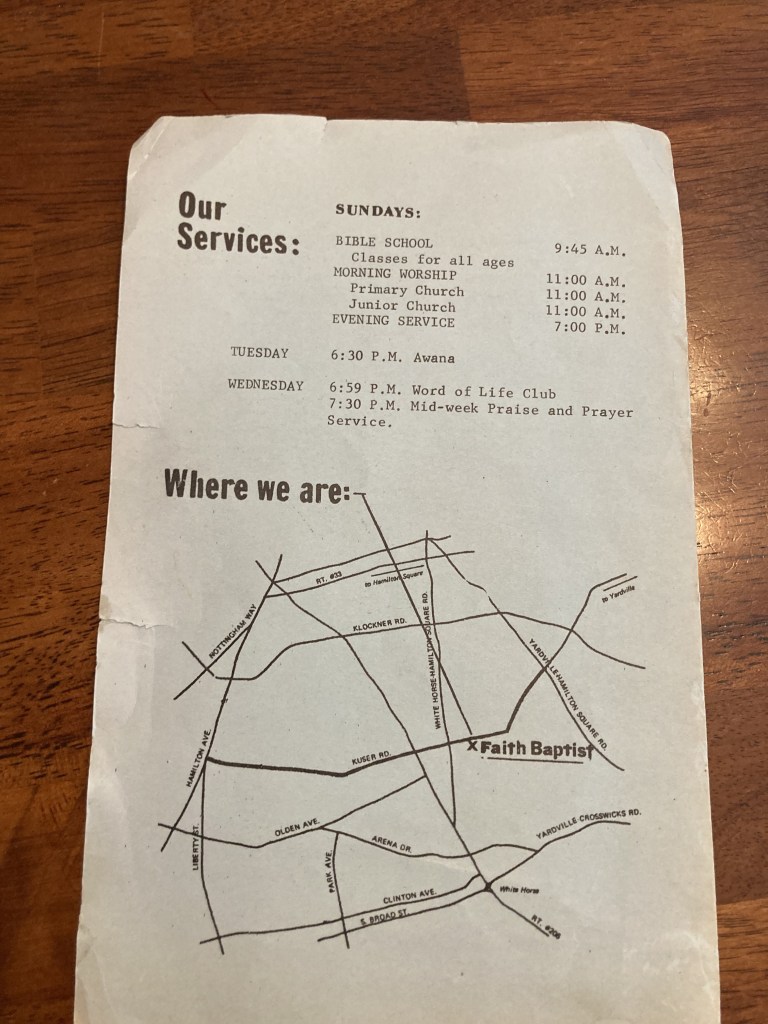
- A location (2111 Kuser Road — originally the Sprague farm)
- Three main buildings: The Youth building, Our first auditorium, and the beginning stages of the new auditorium
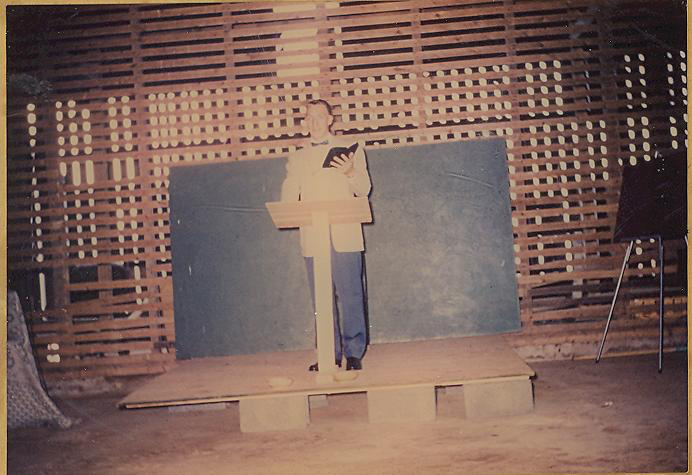
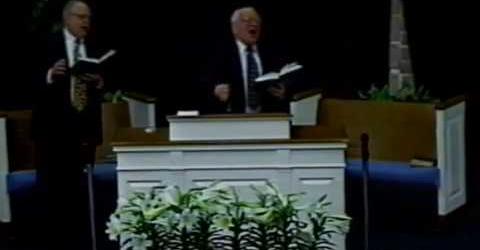
(Pastor Richard Nelson, preaching in the farm building that became the first sanctuary)
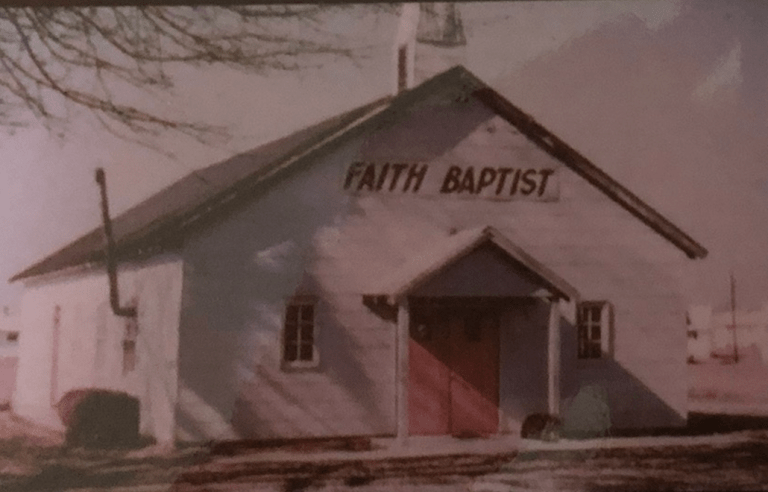

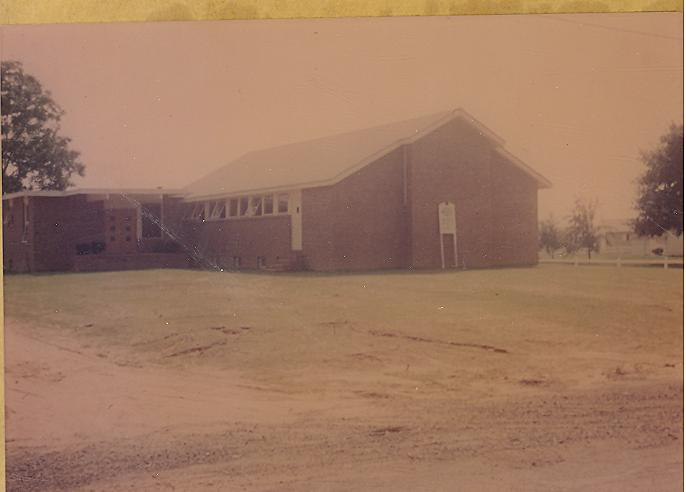
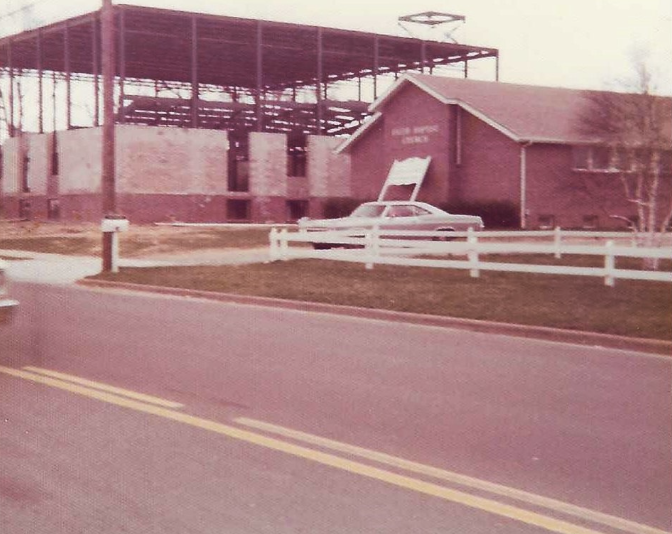
(The second building and the third building in construction)
- A church parsonage

- Leadership & Dedicated Workers
- Approximately 80 people were in attendance.
- Sunday School teachers — who had taught for years
- The Vacation Bible School program — Two weeks every summer
- A Christian School: Pre-K through 7th grade — Approximately 60 students enrolled, and a small handful of teachers and staff
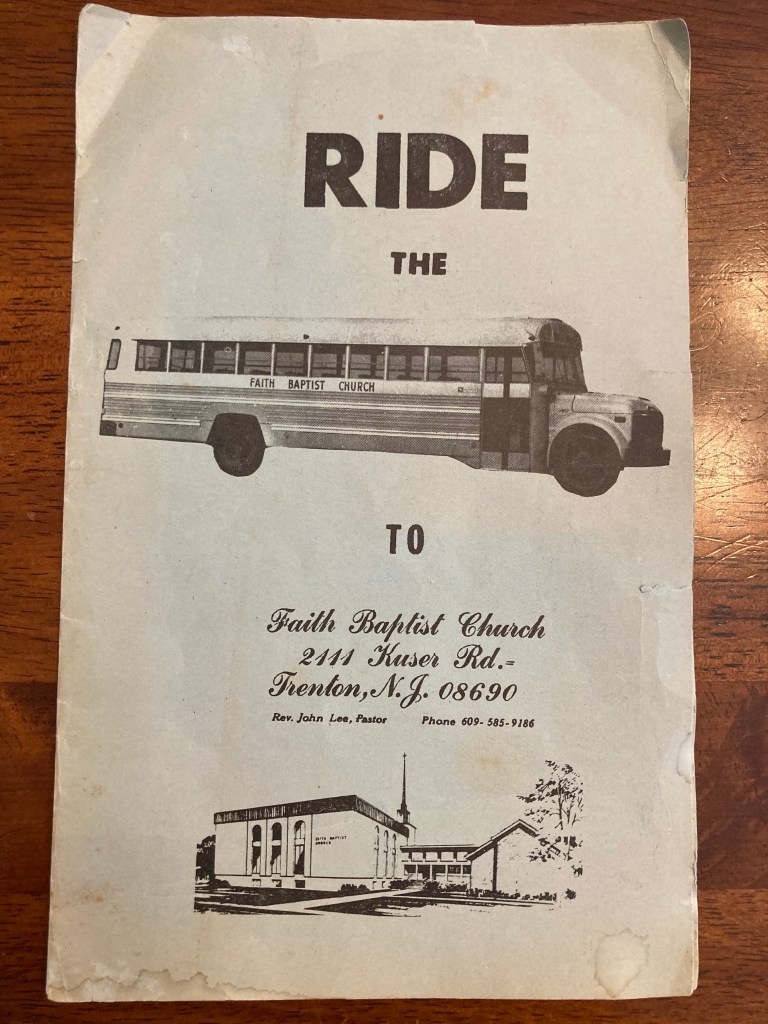
- A bus ministry
- And a terrific song leader!
(check out the many pictures below featuring the earliest days)
Having all that in place — and more — made it possible to stand on the shoulders of pastors, members, and friends and build into the future.
In June of 1979, I was wrapping up classes at Baptist Bible College (Clarks Summit, PA). Glen Crabb, a fellow professor, was filling in the pulpit at FBC now and again and asked me if I had any interest in speaking there.
We would be traveling to Michigan in a few days but accepted the invitation to fill the pulpit the Sunday before we left. I still remember my first thoughts after arriving at FBC, “Wow, what a huge building right in the middle of Hamilton, on one of its main roads! What an opportunity for someone to impact this community.”
I spoke, and we left for Michigan to visit Ruth’s parents. We had no thoughts of leaving Baptist Bible College. I had already signed my contract for the coming 1979-80 school year, and classes would begin again in the fall.
However, Dick Shirk, chairman of the Deacon board, called my in-law’s home a few days later while we were in Michigan. Dick asked if I would fill the pulpit through the summer months. To this day, I have no idea where he got my in-law’s phone number (Remember, there were only land-line phones in those years). I was off all summer and accepted the opportunity.
Faith Christian School – The Early Years:
In 1979, Faith Christian Academy was already in operation. In 1974, FBC assumed the ministry of “Trenton Christian Day School,” which was located on the Artic Parkway in Trenton, NJ.
The principal of TCDS was Marguerite Martin, who remained the principal when the school moved to its new location on Kuser Road. Mrs. Martin and other TCDS board members were part of FBC, and when the school was struggling, FBC offered to take over that ministry.
Faith Baptist Church had already begun planning for a new auditorium and classroom structure, and it added to its plans the entire three-story back section of the present building — the lower classrooms, the main floor offices, and the third-story classrooms and restrooms.
The new building was still in construction when the TCDS moved in 1974. In fact, the new building was still uncompleted when I arrived in 1979. Only the lower floor classrooms were “finished” and in use.
Historically, in 1973 and again in 1979, the energy crisis created many social and economic changes. After the Iranian Revolution in 1978, and the fall of the Iranian Shah, crude oil prices doubled. That created gas shortages across the nation. Long gas lines and high prices caused financial disruption and unemployment.
Partly due to the economic and social disruptions, FBC struggled to get the new building finished. In fact, the building slowed to a halt. Nevertheless, the members and friends of FBC worked on the lower level to make the classrooms usable. They cement-coated the hallway and classroom walls. The fellowship hall was just bare cement block with a basic small kitchen.
In 1974, Faith Christian Academy was composed of preschool, kindergarten, first grade, a combined second and third grade, a combined fourth and fifth grade, and a combined sixth and seventh grade. I don’t know if there are any enrollment records, but in 1979, there were approximately 60 students. Some classrooms had less than six students.
The majority of the students were bussed from Trenton (primarily because FCA was originally located in Trenton). New Jersey had a department of education that offered bussing for all children who went to public or private school if they were over two and under twenty miles away. If bussing was not available in a particular area, the state reimbursed the parents for driving their children to school. Over the years, about half of the students came in on buses from the Trenton area.
We offered pre-care (7:30 a.m.) and after-care (until 5:30 p.m.). There were some students who were dropped off at our house at 6:30 a.m., and we took care of them until pre-care began. In fact, Debbie Laycock’s niece and nephew attended FCA for years, and I drove out to Jacobstown (School House Road) and picked them up three days a week.
There was a dress code, and ultimately, we went with a school uniform because we grew weary of making constant judgments of whether this or that met our stated code. We also expected our teachers to dress like professionals if they wanted to be seen as professionals. How odd would it be if students were required to dress properly, but not the faculty and staff!
Tuition was $999.00. In 1979-80 and again in 1980-81, we had serious conversations about closing the school because of the difficulty of covering our payroll and operational costs. We were seriously operating in the red! Nevertheless, by God’s grace and kindness, the support of Faith Baptist, and the hard work of dedicated people, we were able to consistently meet payroll for our small faculty and staff.
In 1979, FCA was using physical payment cards. FCA never had a clear idea of where we were in accounts receivable. I computerized the billing system (with a TRS-80 microcomputer) in the Spring of 1980, and we discovered that over $20,000 in tuition payments were still delinquent. That was one-third of our planned income. We gingerly applied some pressure in the few remaining weeks of school. Nevertheless, at this point in the school year, some parents decided not to send their children to school for the remaining weeks rather than pay their remaining tuition.
We kept tuition at $999.00 for years because the financial stress and difficulties of operating the school were not due to low tuition but to the very small class size. The tuition charges were in line with what families could afford and perhaps even slightly higher than some could afford.
The physical operating costs were fixed whether four or twenty desks were filled in a classroom. There would be additional faculty costs if and when we turned the combined classes into single classes. We knew that if we could increase class enrollment, the finances would turn positive, and the school would survive.
Obviously, Faith Christian Academy survived. It became a thriving Christian school ministry of FBC, under the long-term leadership of such individuals as Steve Viars, Cindy Haueisen, Sam Barfell, Debbie Laycock, and Sharon Wilbur. Other leaders also stepped in to meet a need: Greg Hogan, Dave Watson, Dennis Twigg, and Wayne Glass.
Ultimately, we ran out of room. We moved everyone out of the three (at that time) administrative offices and turned them into classrooms. The administrative large cubicle desks were located in the main overflow area of the church auditorium. We moved the nurse’s office downstairs to the “faculty lounge.” My office was a newly framed-out triangular office in the overflow area. Our music classes were moved to the recently remodeled Youth Building (which was once the original church sanctuary).
There were years when I taught all the middle school Bible classes, as well as an elective class in computer programming. I thoroughly enjoyed the opportunities! After teaching 6 & 7 grades in the 1979-80 school year, Ruth continued to work in our lunch program and the main office.
During the early years, Ruth volunteered her labor. As the years progressed, she became the office manager for school supplies, books, accounts receivable, payable, and payroll. Ruth knew how to squeeze a nickel, and our money went further than it could have with her drive to make sure we got the best prices for what we purchased. Ruth did not just manage the school finances. She made it financially possible to grow as a school by pursuing the best and wisest use of its money. I constantly relied on her to give me an idea of what we could and could not do financially and operationally. We operated in the black for all but two years of the 30 years Ruth managed the finances of FCS. I cannot say enough how important Ruth was to the financial stability of the school.
The two years we operated in the red were 2007-2009. If you remember, the “Great Recession” culminated in September of 2008 when Lehman Brothers went bankrupt. Toxic assets had built up in the form of subprime mortgage packages. These packages were sold off to other investors, and it created financial havoc and fear.
Because of what was taking place in America, we froze tuition and salaries (for both the school and church employees). We initiated a scholarship program and virtually spent $120,000 to help families cover the cost of tuition. Twenty-two new families were able to send their children to FCS (for very little cost that year and with slow and increasing costs in the years to come). Eighteen of those families continued and completed their elementary and middle school education at FCS. The following year, we spent $100,000. Those were the only two years we were in the red. That was one of the best programs for that season of the school’s ministry!
Ultimately, the school enrollment reached 414 students in PreK-8th grade. FCA had four preschool classes, as well as double kindergartens, double first grades, double second grades, double third grades, double fourth grades, double fifth grades, and sixth, seventh, and eighth-grade middle school classes. The class size was limited to 25.
At times parents asked if the classes were too large. The simple and accurate response was, “Not when our teachers know how to control a class.” When I was attending seminary at Grace Theological in Indiana, Ruth taught in the public schools with class sizes over 30 without any difficulty.
We had teachers who had degrees in elementary and secondary education, wanted to teach in a Christian school, and knew how to teach and control a classroom! Many GREAT teachers and staff members served at FCA. It was our faculty and staff that made FCA what it was. They were the ones who were in their classroom or office carrying out the day-to-day demands of school life. If you were one of them, be assured that you made a difference in the lives of thousands of students who attended Faith Christian Academy.
Let’s add some other details . . . .
- Trenton Christian Day School moved to Kuser Road in 1974.
- Some of the earliest teachers were Tim Lee (3rd grade), Dave Young (4th grade), Janet Long (Kindergarten, 5th grade), Holly Rifenberick (Rivedal), and Mrs. Edna Johnson.
- Darryl Hardin, Kristine Howe Goldey, Steve and Rick Dempsey, and John Plakiotis were FCA students.
- In the 76/77 school year, FCA went through 7th grade.
- In the 1976/77 school year, there were only 3 students in 5th grade.
- Dave Young (1973-1976) and Tim Lee (1976-1979) were two of the school principals.
- There were 60 students enrolled in FCA for the 1979/80 school year.
- In the 1980/81 school year, FCA didn’t have a PE teacher, so middle school teachers would rotate gym class (Stu Tripler, Sam Barfell, Chris Cole, and Ed Hlad).
- The first 8th-grade graduating class in 1983/84, and Karan (Cleary) Peterla was the valedictorian.
- FCS Sundays: Over the years, we set aside one Sunday morning or evening service to recognize the largest ministry of Faith Baptist Church.
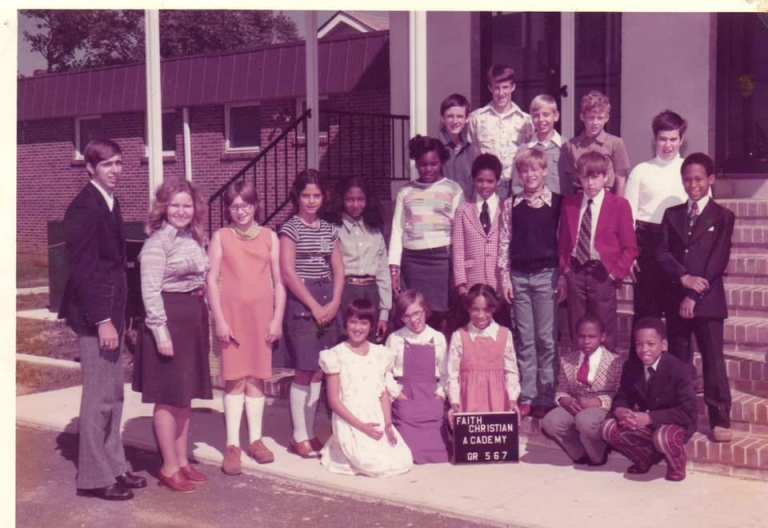
(Tim Lee, Mary Kay, and the 5,6, & 7th grade students)
Pastor Ted & Ruth Martens – 1979
Before coming to Faith Baptist, I was a youth pastor at Albany Baptist Church, a small church outside of Athens, Ohio (in Albany, Ohio); I was pursuing my Ph.D. at Ohio University. Upon graduating, I taught at Pillsbury Baptist Bible College (founded by George Pillsbury — of Pillsbury fame). Then, I taught at Tennessee Temple University and finally at Baptist Bible College, Clarks Summit, PA.
It was while I was teaching at Baptist Bible College that I first heard of Faith Baptist Church in Hamilton, New Jersey. I visited FBC in the summer of 1979 and spent the summer preaching, along with talking to the leadership about pastoring FBC.
In July of 1979, I agreed to candidate as pastor of FBC. They asked me how soon I could come if they called me as their pastor. I indicated that I had signed my contract with BBC in February and would and should honor my contract. Nevertheless, I could drive from BBC to FBC for the Wednesday and Sunday services throughout the year. It was only a two-and-a-half-hour drive. On the first Sunday in August, the members of Faith Baptist voted and called me to be their pastor.
But as I stated, in 1979, we were facing a national gas crisis and long lines (gas jumped from about 50 cents a gallon to 80 to 90 cents). However, when Faith Baptist purchased the Sprague Farm on Kuser Road, it came with a gas pump and a 500-gallon storage tank. I would drive my Toyota to FBC every Wednesday morning/afternoon and every Friday afternoon after teaching and could leave FBC with a full tank before returning to BBC. “Jonny’s Hot Dogs” became a well-visited stop on the way down and back.
During the week, Ruth, our three boys, and our daughter Wendy, (who was born in September of that same year) stayed in Clarks Summit. Most weekends, we all drove down to Faith Baptist. We did that until around December. In December, one of our FCA teachers was no longer able to continue, and Ruth offered to take his place. Ruth taught the 6th and 7th graders while Madge Powis cared for two of the boys and our baby daughter. Matthew was in 3rd grade. Ruth and our children now spent their full time in Hamilton, and I continued to drive back and forth to Clarks Summit. I adjusted my teaching schedule in January and could be at FBC for about the same amount of time I was at BBC.
This may seem unrelated, but it is not. Even without a pastor in the summer of 1979, Faith Baptist Church continued with its two-week VBS program. That speaks to the ministry mentality of the membership and friends of Faith Baptist. That has always been the spirit of the many people who have been part of FBC! For all of my 36 years, the church has had an evangelistic and aggressive desire to reach out to the community.
I first met Marge Garrison, a simple and unassuming member of FBC, in the summer of 1979, during Vacation Bible School. She was manning the registration table outside of the youth building. I don’t know if anyone knew how sick she was. I didn’t. But she was there doing what she could and wanted to do! Sadly, she passed away. That was my first funeral. Surprisingly, she included FBC in her will and left FBC $17,000 (in 1979 money). I’m sure she knows now, but she was one of the people who kept Faith Baptist growing during that first year!
Faith Baptist really didn’t have any money. Fortunately, Ruth and I were able to live off of my teaching salary and what I earned by publishing Sunday School literature for Union Gospel Press. Prayerfully, the church would grow over these months, and FBC could finally afford a salary.
I found a great youth pastor who was willing to travel with me on weekends, and he became our youth pastor for three years — Steve Viars. After his seminary education, he spent another three years with us. His work was invaluable!
Walt Ivaniniski, who worked for a trucking firm, drove an 18-wheeler to Clarks Summit, and we moved everything in one fell swoop. We put our house up for sale and prayed as we continued to pay our monthly mortgage.
By the time I finished my contract at BBC in June, we had seen meaningful growth. Within the next year, we sold our home in Clarks Summit.
The Early Years:
Faith Baptist Church and Faith Christian Academy struggled financially during our early years. Throughout the national gas crisis and the early 80’s there was a great deal of unrest in the country. The unemployment rate was already 6% in 1979 and went to 10% by 1982. President Jimmy Carter would lose the election to Ronald Regan in 1980.
The church was paying off a bond program it had initiated for $500,000. Approximately $250,000 of the bonds were sold to members and friends of FBC. The other half remained unsold, but all still came due for about $2,500 a month. We were paying down the bonds that were coming due, as well as the bonds that were unsold.
The new building program was already stalled in 1978. Yardville National Bank stopped any further loans for our building program, and any further construction of the new building ended. The main structure of the new building was completed, and the outside of the building consisted of bare cement blocks.
However, the church decided to purchase a new stucco application machine to at least stucco the cement blocks so that it at least had a better appearance. Apparently, they tried to use the machine, and the feed lines clogged up because they did not know that they had to run water through them before the stucco was applied. Ultimately, they then found a contractor who would stucco the outside.
I only know that because when I arrived, the brand new expensive stucco machine was still there, with clogged feed lines. At that time, I suggested selling the machine as is. It sold for under $1,000– but we could use the money!
Every month, the first priority was to make sure our monthly payment to the bank was met so that those who had purchased bonds that were coming due were paid by Yardville National Bank (who oversaw the bond program).
We attempted to save any and all costs that we could. Regretfully, we had to lay off our church janitor (Dale Conway). We began using kerosene heaters in the old farmhouse parsonage. We scheduled a lot of work days to smooth out the old stone driveway and parking lot. We bought a snow-blower rather than have a company remove the snow. It buffed the auditorium floor every Saturday night. Others who were just recently saved (Cindy Gerner) cleaned the church weekly.
Ruth and I attended auctions Saturday after Saturday (with our kids in tow) to buy school desks, mimeograph and ditto machines, a floor buffer, filmstrip projectors, projector screens, and office equipment. Most auctions were held in dark, dungy, wet, closed school buildings. At one auction, we bought 100 classroom desks for 10 cents each. On Mondays, we would use someone’s truck or the church buses to pick it all up and store it all in the empty shell of the new auditorium.
I’m not sure who installed a basketball hoop in the new auditorium, but many basketball games were played there. It was probably Viars, Barfell, Cole, Hlad, and Tripler (They were all suitemates at BBC). At that time, because it was totally unfinished, the floor was flat. When the auditorium was finally finished in the 80s, the slanted floor of light-crete was poured over the flat, pre-stressed slabs.
During those early years, the church met in the second building. The structure was a long laminated arch design, with two rooms in the back. One room was the church nursery, and the other was my church office.
AWANA grew under the leadership of Tom and Madge Powis. Some of the most senior saints worked tirelessly during the two weeks of VBS! Steve Viars did an outstanding job with the youth, and it grew and grew! Sam Barfell asked me if he could begin a “First Person” Easter or Christmas musical. I had no idea what that was or what it meant, but we went with it! The “Blondin” story goes back that far! We saw people being saved, baptized, and others joining the church.
There were times when I received phone calls (An extension church phone line was installed in the parsonage.) — “I need to know how to be saved.” Or . . . .”I broke down on 195 and looked in the Yellow Pages for the biggest church ad and am calling to see if you could help.” There were times when strangers who lived in the surrounding neighborhood were perched out on the back steps early Sunday morning — “I told my mom I wanted to go to church today and asked my mom where I should go. She told me, how about that church on Kuser Road.” Or . . . “I think I am going to die because I just swallowed rat poison.”
I often repeated the fact that FBC was not known. When you mentioned “Faith Baptist Church, people would often say . . . . “Oh, is that the church with the daily quips and quotes on its sign.” “No . . . that would be Bible Baptist Church on Klockner. But that is a good church as well.”
Presence and Substance: There were people who didn’t know about Faith Baptist, and there needed to be more than just Sunday services.
We began a daily radio program on WCHR- 94.5 FM. It aired every weekday from 12:05-12:15. It was called “Moments of Faith” — “Welcome to Moments of Faith, brought to you by Faith Baptist Church, 2111 Kuser Road, Hamilton, New Jersey.” That was one of the BEST investments we made in growing the ministry.
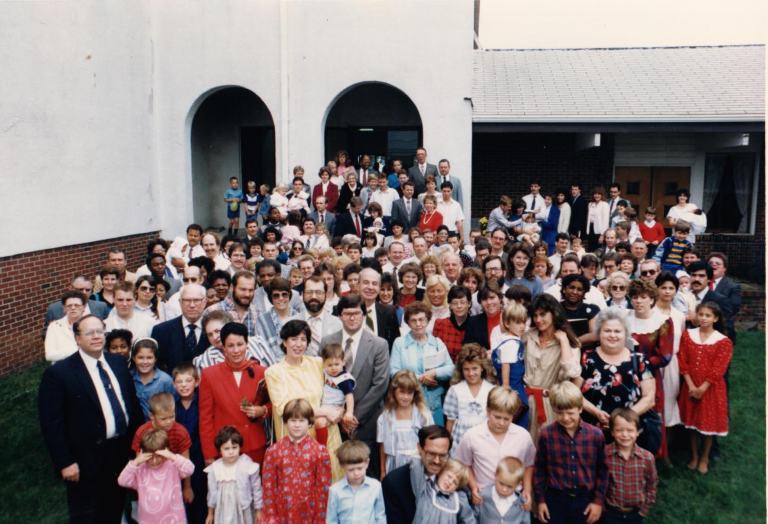
(Taken In The Mid 1980s)
Within two years, we opened up the back wall to the nursery and my office for more seating space. We added folding chairs at the ends of all the pews. We even put chairs outside of the double doors into the hallway coming into the auditorium. We also left the choir on the platform. We were packed out and had to now work on finishing up the new church auditorium.
Chris and Florence Knoster joined our membership. They lived in Sergeantsville, New Jersey. They were a Godsend as we moved to finish off the shell of an auditorium. It would still be several years before we would move into it, but we were moving forward to that day.
Interestingly, we had continued to pay off the church bond program that was initiated in the 70s. As I stated, about $250,000 of the bonds were unsold, but we still had to put $2,500 a month into a sinking fund at Yardville National to pay them off when they came due in the coming years. At various times, we cashed in some of the bonds that we owned and were paid off. Some people who purchased bonds were willing to donate them to FBC when the bonds became due. When we were ready to finish off the auditorium, we had about $212,000 of them paid off, and we owned them!
Let’s add some other details about the earliest years of ministry. . . .(any corrections are welcome)
- FBC was officially incorporated in 1961.
- FBC was (is) a member of the GARBC – General Association of Regular Baptist Churches
- The second church building was dedicated in 1964.

- There were only three senior pastors of FBC from 1961-1979: Pastor Richard Nelson (two years) , Pastor George Elliot (approx 2 years), and Pastor Jack Lee. Pastor Lee was the senior pastor for 13 years.
- Across the 63 years history of FBC, there have only been five Senior Pastors:
Pastor Richard Nelson: 1961-1963
Pastor George Elliott: 1963-1965
Pastor John (Jack) Lee: 1966- 1979
Pastor Ted Martens: 1979-2016
Pastor Lance Walker: 2016-present
- There was a bus ministry in place before I arrived in 1979 — Gail Ivaninski was one of the “bus runners.”

- The deacons included Dick Shirk (Chairman and Treasurer), Myron Howe, Walt Ivaniski, Dwayne Adams, and Tom Davies.
- Our AWANA club was one of the earliest in number (#52)
- The Parsonage: The parsonage was an old farmhouse with no outside wall insulation, breezy windows, and a leaking slate roof. Many old farmhouses were built without insulation because fuel oil was so cheap (18 cents a gallon). It was heated by steam radiators, and as many know, the pipes would bang in the winter. Because of a lack of money, it needed a lot of TLC, which never really happened because — well, a lack of money — and the willingness of Pastor Lee to put ministry first.
- The church auditorium did not have air conditioning. I traded my radial arm saw for a self-contained three-ton unit. We mounted the unit on the roof area over the auditorium. The duct work went down the middle of the inside peak of the auditorium. When turned on early enough, it provided some level of comfort to the end of the morning service. That a/c unit lasted for years!
- Jean Davies was the church organist for years! At the time, we had a small spinnet organ that really delivered a great sound.
- Tony Diquinzio was a mainstay for congregational singing! There was no one who did more to encourage and inspire congregational music than Mr. Music!
- The church water overflowed the boundaries of the stairs and down to the hallway below when some of the larger adults were baptized.
- Two typical signs were located on the left and right sides of the front wall, showing the hymns that would be sung, attendance, and offerings.
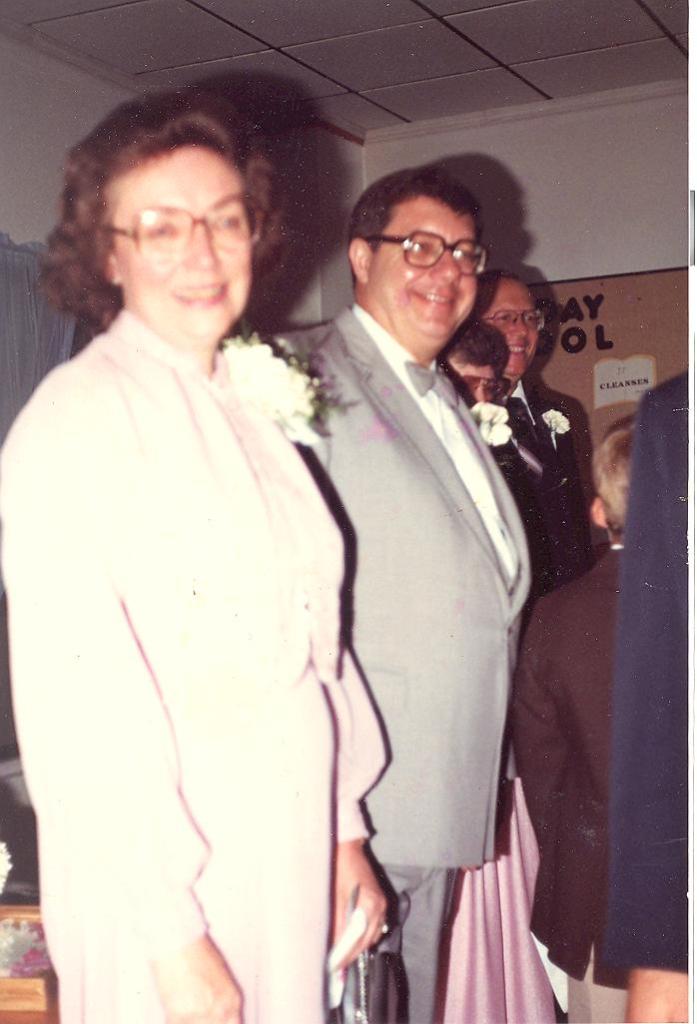 (Dick and Betty Shirk)
- Dick Shirk often suggested that we needed to replace the parsonage. I believed that we needed to grow the church, finish off the auditorium, and then address the issue of a new parsonage. That was the plan we followed — auditorium finished first — 1983-84, and then the parsonage – in 1986.
- The new auditorium was blocked off with doors on the “three-step side” of the overflow hallway near the second building and the opposite “multiple-step side” going out towards the parsonage. That entire level, as well as the third floor, was composed of unfinished bare cement blocks and pre-stressed slab floors. I would repeatedly walk through that unfinished corridor and ask the Lord to give us the new auditorium we needed.
- The new unfinished auditorium had a main floor and balcony and could seat anywhere from 1,100 to 1,400 people. In the coming years, with chairs down the aisles, we had standing room only for our annual Christian musical / Easter dramas.
The New Church Auditorium:
Before the auditorium project was begun, we finished off the three offices on the main floor of the new building. We took down the temporary fiberboard walls and doors that blocked both ends of the overflow hallway, and created a new wall separating the unfinished auditorium and the office area. Bill Titus joined me in putting up the drop ceilings and slate floors of the hallway and back main entrance. Along with other church and school staff members, we were able to finish off the two restrooms on the same floor, as well as a work room next to the ladies’ room.
The front church courtyard was really never used for entry. A large 5,000-gallon fuel tank supplying our two oil-burning furnaces was buried under the courtyard area. You can imagine the cost when we had to fill that up every year — several times depending on the winters.
Also, before the auditorium project, George Kozlowski was hired to finish off the four classrooms above the offices. I remember that the cost of the classrooms was $18,000. Mike Bacon was hired to finish off the third-floor restrooms.
Chris and Florence Knoster joined Faith Baptist in the early 1980s. Again, they heard of our ministry through WCHR-fm. Chris was a contractor and craftsman. His personal integrity, honesty, and love of the Lord moved us to ask him to oversee the finishing of the new auditorium.
We had approximately $212,000 in hand from the unsold bonds. We had paid them off and we owned them. We began a fundraising campaign to raise the additional money needed. The Motto was, “If not us, who. If not now, when?
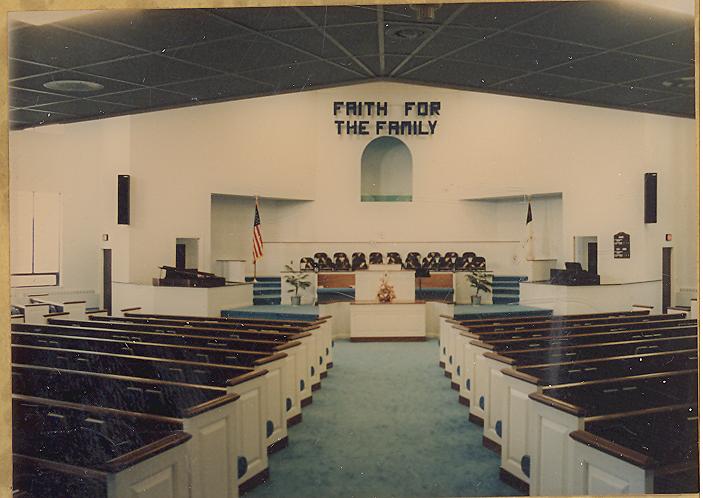
The original blueprints and design of the auditorium involved a great deal of elaborate woodwork, such as Roman columns. We scrapped most of it and went with a more simple appearance. The original platform area had both a piano and organ walled area, left and right of the platform. That was all removed years later, and the stage area was expanded. The piano and organ were placed on ground level, and the organ speakers were built into the upper stage wall areas.
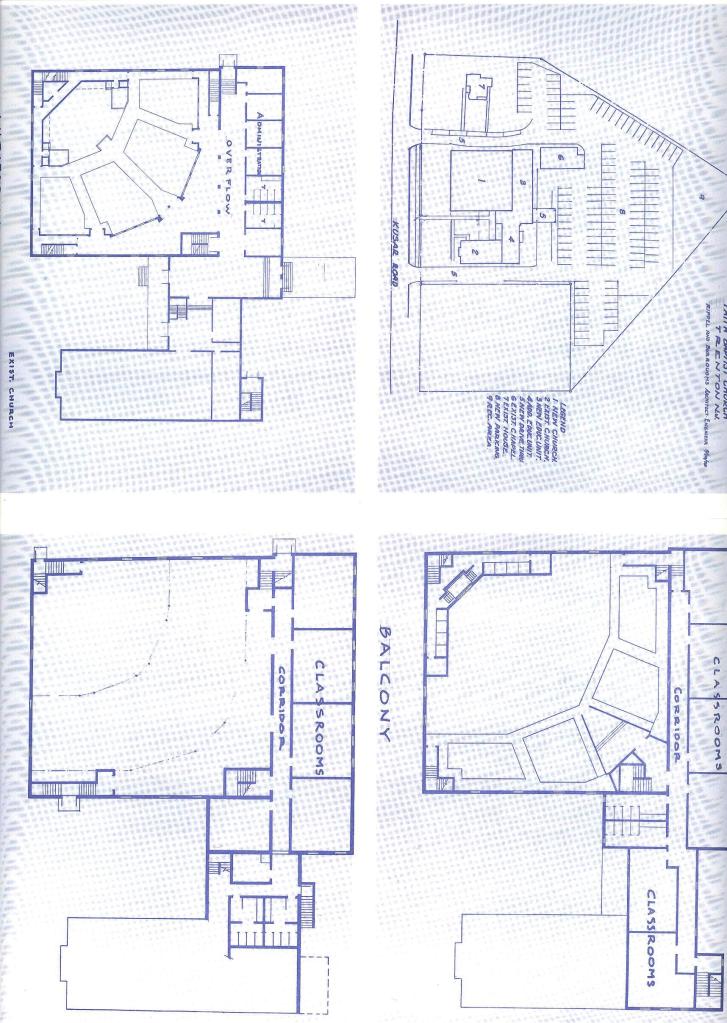
Chris oversaw the installation of the suspended ceiling, the lighting and electrical runs, the finishing of the inside walls, the framing and sheetrocking of the stage area, the cement pouring of the slanted isles, the light-crete pouring of the slanted floor areas under the pew, the beautiful “wood tooth” work across the top front area above the stage, and more.
The pouring of the concrete isles and pew areas significantly added greater weight to the floor area. Therefore, we had to have an engineer come in and ensure that the iron I-beams that supported the pre-stressed slabs could bear the weight. I often kidded when the auditorium was packed that if the engineer was mistaken, we might find ourselves in the fellowship hall one level lower — We TRUSTED the engineer. We did need to add additional support to the I-beams.
Initially, we used folding chairs throughout the main floor. The floor was carpeted with a light blue carpet. It would be some time later when the white-sided padded pews, and matching church furniture would be added. Ruth’s mother, Virginia Klomparens, donated and paid for the matching pulpit and communion table.
The balcony area remained unfinished for years. It was not approved for occupation because there was no glass safety railing in place. Ultimately, the glasswork would be added, and the balcony would be finished off with commercial seating.
The New Church Parsonage:
It would be approximately seven years before the new parsonage was “built.” We moved to a townhouse in Bordentown for several months. I drove to the church around 5 a.m. since our boys still delivered the Trenton Times to the homes surrounding the church.
Wendy was in second grade at FCS, and she asked if she could watch as they tore down the old parsonage. She stood behind the double doors of the church facing the parsonage as they demolished the old farmhouse. The demolition of the parsonage took less than 30 minutes, and it was all hauled away that day.
The new parsonage with a full basement cost $122,000. The new parsonage was moved much closer to the street. It was a four-section pre-built home with all the heating, electric, carpets, kitchen, bathrooms, and plumbing pre-installed. Each section was craned on (during a very wet day) and weighed approx. 80 tons (if I remember accurately). Joe Tardiff was the realtor who oversaw the project.
It was an all-electric house. We had a window air conditioner in the front central hallway window on the second floor. Years later, a gas furnace was installed with central air. Years after that, the furnace was replaced with a high-efficiency gas furnace and a high-efficiency a/c unit.
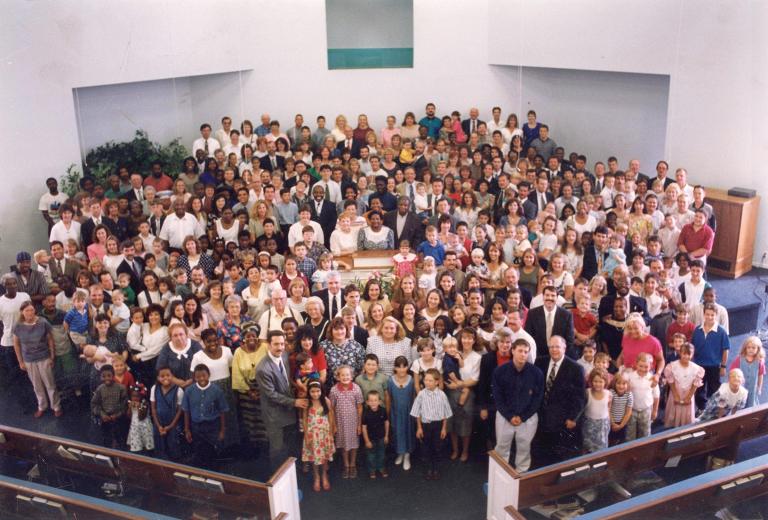
(Church Picture In The Early 1990s)
The Following Years (In no particular order):
I am not sure about the historical sequence of the following elements of our church history. Nevertheless, at the time, they were all important milestones between 1979-2016.
Some General Projects: Over time, some major projects were tackled. A major re-landscaping of the front area with the addition of a new lighted sign was done. The auditorium carpet was replaced, the pews were recovered, a “rubber roof” was installed, the roof air conditioners were replaced, the baptistry and stage areas were improved, the 3-phase electrical service was upgraded, the furnaces were converted to natural gas, and the oil tank in the courtyard was removed.
Summer Vacation Bible School: Approximately 300-500 children attended VBS, which was held both on the church property for the younger and at Faith Farm for the teens. It ran for two weeks, beginning the first Monday after July 4th. Crafts, games, snacks, and Bible Time were all part of the evening. We went from individual classroom Bible lessons to the “Bible Tent,” where the various age groups went for Bible time.
Family Seminars: For a number of years, we offered “Family Seminars.” After the first year, Stan and Jeanette Peterla joined FBC and were part of the seminars. The old mimeograph machine out a lot of pages of seminar notes!
Faith Bible Institute: While at Faith, I also was involved in preparing travelling teams for Practical Bible Training Institute, in Binghamton, NY. While working with them, we initiated an extension program. Students could take courses at FBC. The classes were taught by me, and I received official college credit. PBTI would officially enroll them along with their own students on campus and provide an official transcript if they wanted to transfer the course credits to other Bible colleges or Christian universities. We ran that program for five years. Barb Coleman was one of the “A” students who took a number of FBI classes.
Christmas Ministries: Christmas continues to become more and more secularized. The church should be doing all it can to keep Christ in Christmas. Therefore, we had extensive ministries during the Thanksgiving and Christmas seasons.
They included . . .
- The Christmas Angels: Our teens would dress up as angels with attractive stacked gift boxes in hand that contained various ceramic Christmas figures. The teens told the Christmas story to the children (and surrounding adults) and then gave out a small gift to each child.
- Carol O’ Gram: Anyone could fill out a “Carol O’ Gram” card, and the young adults would knock on that person’s door, sing a few carols, and deliver the Christmas Gram with a mug filled with a pack of hot chocolate and a gift.
- Living Nativity: Out at Faith Farm, a small town would be set up with costumed actors who shared various parts of the Christmas story.
- Christmas Light Show: The Living Nativity was later replaced with an animated Christmas syncopated to music light show – from Thanksgiving to January 1st.
- Christmas Neighborhood Gifts: For many years, we gave all of our neighbors in the immediate surrounding area our annual Christmas gift.
- Christmas Musical Drama: On a Saturday and Sunday of December, the Annual Christmas Musical Drama was presented. It included over 100 actors, a sound crew, a light crew, a makeup crew, a props-stage crew, and more. We also provide a beautiful “refreshment area” in the overflow for those who arrived early — and they did arrive early to make sure they had a seat. Fresh fruit, crackers and cheese, a chocolate fountain, and beverages were beautifully arranged.
Easter Musical Drama: The drama was presented on Good Friday, Saturday, and Sunday evenings. The Lord’s death on the cross and His resurrection and ascension presented a clear Gospel. Just like during the Christmas drama, it was not unusual to see five to twenty people clearly respond to the closing message and, for the first time, profess Christ as their Saviour.
Faith Farm: On December 10, 1998, we purchased what was called “Faith Farm” on Crosswicks-Hamilton Square Road for $225,000. We intended to build our new church/school facilities on this 15-acre farm. However, on both attempts to get permission from the township, we were turned down. Lanning Engineering did our site plans. Bill Groh was our attorney.
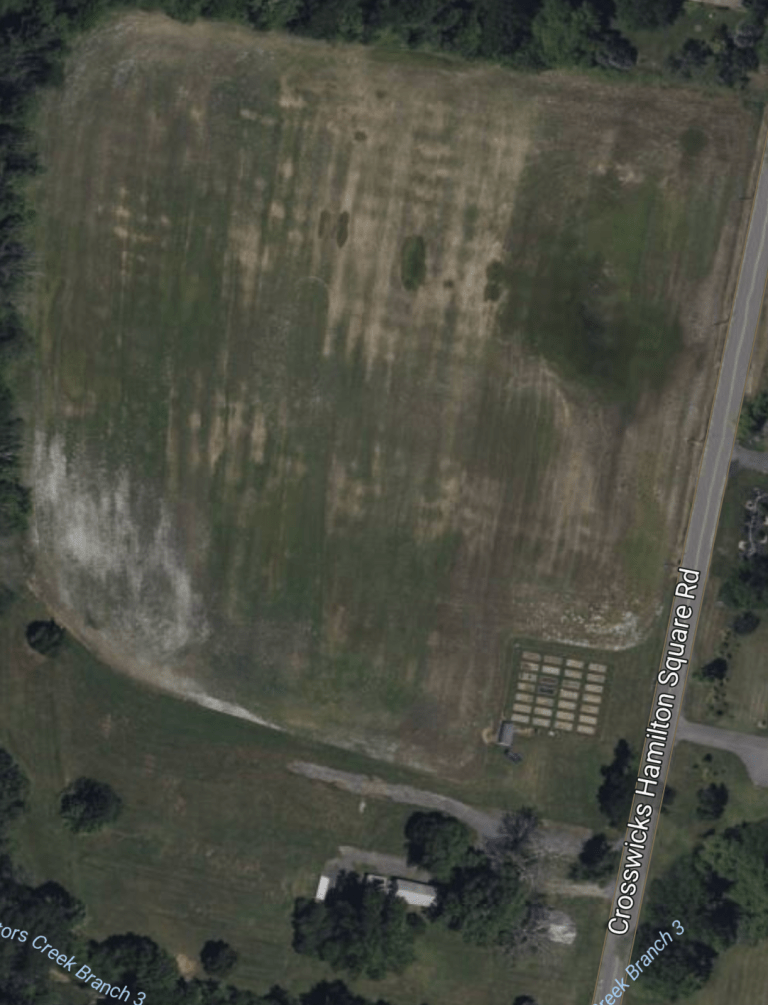

In fact, one day, Bill called me to let me know that the township had revised the local land ordinances concerning our farm property. The new ordinance stated that only a church auditorium could be erected in that zone. No additional church/school buildings or a gym could be erected. Bill said that we had only a few days left to contest the change. We contested it, and Matthew Martens litigated it in court. Matt also contested the basis of the zoning board’s decision after the second refusal by the zoning board time. We won both cases. Even though Matt’s work was done pro bono, the cost of our township presentations well exceeded $50,000.
While I was pastor of FBC, Maguire-Burke real estate company offered to buy the property for $2.2 million. I indicated to Bill Burke that we were not interested since the residentially zoned property in Hamilton is hard to find, and the cost of buying another property was only increasing. We anticipated future growth, and therefore, we knew that we needed to hold onto this valuable asset. Only if you don’t plan on and aim for growth do you get rid of such valuable assets.
Harvest Hayride: After we purchased “Faith Farm” we were committed to using it as soon as possible. We started with a “Corn Fest” for the first two years. It slow expanded to hot dogs, hamburgers, and fresh buttered corn. It was all free to those living in Hamilton.
The Cornfest turned into the Annual Harvest Hayride. It was open to all the surrounding communities, and it was completely free. Initially, the fair ran on a Friday and Saturday evening in November, after Halloween. Slowly, it moved to the early weeks of October because of the cold temperatures.
We had about 14 different fair games, along with funnel cakes, curly fries, pizza, hot dogs, cotton candy, a full soda fountain, coffee, and hot chocolate. There were one or two tractors that pulled haywagons around the outer perimeter of the field. Ben Backes and Dave Pittman provided the tractors. Two areas of the field were used for small powered race cars that were manned by FBC drivers. Jim LaBaw always provided a warm fire pit area, surrounded by chairs and benches.
We finally had to issue free tickets because the crowds were so large. There were approximately 2,500 people who attended. It was all free of charge.
Country Singspiration: For two years, we set up a Spring “Country Singspiration” at the farm. We always had a lot of musical talent and great singers.
An Allen Organ: A new $45-50,000 organ was purchased. Ultimately, Ruth found it increasingly difficult to play the organ, and during our last few years at Faith, Kevin Kaltreider assumed the role.
The Handbell Ministry: FBC purchased a new set of two octave handbells. We added one or two more octaves to them. Judy Adams was the first director of the handbell choir. We also purchased a set of chime bells years later.
A New Sanctuary Piano: A new sanctuary piano was purchased for approximately $10,000. The previous piano was moved to the fellowship hall. We would sometimes use both of them on stage for a two-piano concert.
Weekly Homeless Ministry: For many years, we picked up the “homeless” from the inner city for a church service and an after-church lunch.
Shower Trailer Ministry: We purchased a portable shower trailer that had two large showers and restroom areas. John Coleman and Ted Roberson were the two men who primarily headed this ministry up in the inner city of Trenton. For a few years, the Bia company, located in Ewing, donated 10s of thousands of free drinks to pass out to those who came out to this ministry.
Thanksgiving Day Dinner: On Thanksgiving day, we provided a free Christmas dinner for the “homeless.” From 7 a.m. to 3 p.m., the members and friends of FBC would provide a beautiful meal for those who we transported and who drove to FBC. At times, we even included clothing and haircuts. For a few years, we even did this on Christmas Day.
Food Pantry: Mike and Carol Woods started the food pantry, which was open one Saturday a month for people in the Trenton-Hamilton area who needed assistance.
Morning Perk: In an attempt to relieve some of the parking and seating demands, we started “Morning Perk.” Between 60-90 people attended the 8:30 a.m. service in the youth building every Sunday morning.
July 4th Snack Trailer: FBC was located on a main road and across from the township’s major event park. During the township’s scheduled fireworks shows in Veterans Park, we would have our fully equipped food trailer out front serving soda, cotton candy, slurppies, ice cones, and popcorn — free of charge.
A New Parsonage In Robbinsville: In September 2006, an eight-acre farm was purchased just across the township line for approximately $575,000. Hamilton Township only allows two church parsonages to be tax-exempt. Since this parsonage is in Washington Township, it is also a tax-exempt church parsonage.
Solar Panels: FBC went solar, adding solar panels to the roof of the church, the youth building, and the parsonage. The yearly electrical cost was approximately $60,000 a year. The new solar panels now generated about 1/3 of that cost, and the solar energy credits covered about another 1/3 of that cost. The original installation cost was $300,000 with an estimated 5-8 years cost recovery.
Jacobtown Baptist Church: In the late 1980s, I received a call from one of the remaining charter members of Jacobstown Baptist Church on the line. The conversation was about having someone take over the leadership of their church. JBC had no pastor and a handful of members. They could no longer sustain their operation. With little hesitation and knowing that I needed the approval of the deacons and the church, I indicated that we would be interested in stepping in and helping.
JBC was a member of the American Baptist Convention. As with most church conventions and denominations, the convention is connected to the physical church property (Just ask the various Methodist churches about that today as local churches seek to break away from the Methodist Conference.). I knew that they could claim the property. I called the ABC headquarters and indicated that we were assuming leadership and control of Jacobstown Baptist Church. I asked if they had any interest in the church. They indicate that the church was of no interest to them since it was down to just six members or so. I asked them to send me a letter confirming that decision, and they did.
I then called one of the previous pastors of JBC, who pastored there in the 1960s. His name was Tony Campolo. Tony was there when the church was thriving, and under his leadership, he built the gymnasium, which was still on the property.
It was a short but interesting phone call. I asked him his thoughts on having someone like us take over the ministry of JBC. He said, “I find new birth easier than resurrection.” Wow — the message was . . . forget trying to resurrect a dead ministry and let someone just start a new church in the area.
Obviously, I did not take his advice. Faith Baptist assumed control of JBC with the intent to make it a viable independent Baptist church. We had no interest in making it an extended campus of FBC. Rob Mimna was appointed as pastor, and the deacons of FBC were the deacons of JBC. At that time, and even in later years, some members and friends of FBC joined that work and provided some healthy substance to that ministry. The Lord of Resurrection raised up a healthy church in Jacobstown, New Jersey.
In and around 1992, the phone rings, and it is Ed Hlad, who was our youth pastor at FBC for about six years. He had moved out to Ohio to work at his dad’s church and was now moving back to New Jersey. He was planning on attending Biblical Seminary. Ed asked if there was a position open at Faith. I indicated that JBC needed a full-time pastor. He applied for the position and was called by the church as their pastor.
Home Bible Studies: For several years, we had home Bible studies at the homes of Ben and Shirley Backes and Tim and Vicky Snyder. A number of families joined or attended FBC as a result of those Tuesday and Thursday night sessions.
Mosaic Baptist: We began a church ministry in the inner city of Trenton. We called the church “Mosaic Baptist Church.” Originally, we rented out a storefront in Trenton across from the Justice Complex. Shortly before I retired, we began looking for a building that could be purchased. In 2017, FBC purchased a church building at 111 Harding St. for $200,000. It joined the GARBC (General Association of Regular Baptist Churches) as an independent Baptist church.
People’s Paper: Bill & Merliee Ryan were members of FBC. They owned and managed “People’s Paper,” a well-distributed community newspaper. It is still in full operation to this day. For years, we had full and half-page promotional ads at no charge. At the time, the standard cost for a full page was over $500. Through People’s Paper, we advertised the ministries of Faith Baptist Church and Faith Christian Schools throughout the township. We also ran a column titled “Moments of Faith.” That monthly devotional is still included in People’s Paper today.
Because of Bill’s business, we began publishing a church newspaper. We went through the same procedure and web-press printer as Bill. Again, it was titled “Moment Of Faith.” We published and distributed it monthly for several years.
All Church Cruise: Approximately 80 people joined us on a church cruise departing from Tampa, Florida. We worked to keep the cost to about $500 a person. The cruise was about $225.00 unless you wanted to upgrade. Also, if someone signed up for specific credit cards, even if it had an annual fee, they could get enough flight miles to cover the cost of flying to and from Tampa. It was perhaps the greatest opportunity we had to fellowship and come to know each other. No children were allowed under the age of 15-ish. We have group devotions in the morning and evening. We were all together for dinner and we rotated the people who were at the various tables.
The Murzda Property: The house along the NW side of the church property was owned by Mrs. Murzda. She had indicated that she was going to will her home to FBC. However, her son inherited it upon her death. We attempted to purchase it multiple times. Ultimately, FBC purchased it in 2012 for $340,000. It is now one of the church parsonages and was added to the 2.7 acres of existing church property.
Church Music: Dick Shirk was the choir director for years. He was followed by Kevin Kalteider. Church Pianists included Pam Butler, Kevin Kaltreider, and Devonna Beebe. Church Organists included Jean Davies, Ruth Martens, and Kevin Kaltreider. Special Music solos, duets, and quartets typically included Lori Lee Demarco, Sandy Gutterson, Vicky Snyder, Mike Lestina, and Greg Lestina. We also had a handbell and jr. choir.
Various Special and Not So Special Events:*
- Teen Brookdale Rallies
- Building a church float for the township parade
- Men’s retreats at New Life Island and High Point Camp
- Hand-folding Sunday bulletins on Saturday night
- The usher and greeters ministries
- Installation of a church elevator
- The Red &Blue Sunday school contests – Dick Shirk and Tom Davies were team captains.
- Special meetings with Dr. Al Smith, gospel singer
- Women’s retreats at Ocean Grove
- Over-the-road bus trips to teen snow camp
- Building a snow sled for snow camp
- Opening Youth Group Night
- Annual church picnics at Washington Crossing State Park and New Life Island
- The Christmas gift night
- Sunday evening (afternoon) service at Faith Farm
- Installing our first projector and screen in the auditorium
- The Pig Roast
- VBS Friday night all parent cookout
- FBC Annual Themes
- Teen Missions Trip to New Zealand – John Frizelle was our church missionary there.
- Deacon Meeting’s “snacks”at the parsonage
- FCS Open House
- Over the road trips to Sight and Sound
- Watching fireworks from the front of the parsonage
- Shoveling snow for those members who needed a hand
- Round-up Sunday at Faith Farm and the side yard of the churh& new parsonage
- The all-church pot-luck dinners
- The Valentine Banquets
- Opening day of a new school year
- The Ceramic Nativity gift that many still set up yearly
- Painting the whole new church auditorium together
- FCS soccer and basketball games — with John Coleman and David Bruccoleri
as refs) - Mission trips to Haiti
- “The Newly, Nearly, Oldy wed game” and other skits
- Pius Kalterider’s Organ Concert
- Weddings of great young men and ladies
- ”Turn the lights on, pastor”
- Congregational voting for deacons and church officers
- Working at VBS for two weeks at various posts
- Buying new hymnbooks
- Favorite hymn night before the message
- Kid’s choirs
- Saying goodbye to families that moved..”God be with you till meet again”
- Choir practice and special music for Sundays and the annual dramas
- Using the smoke machines and pyrotechnics
- Working on stage construction — the revolving stage and second story buildings
- Telling the “Blondin” illustration — again
- Creating literature using our in-house offset printing press
- Buying out a paper shop (There was still a lot of paper left up until the day I retired!)
- The Dunkin Donut Saturday night run for left-over “donuts” for Sunday morning
- The Monthly Salvation Sundays — There was hardly a monthly salvation Sunday someone did not raise their hand indicating that they prayed the sinner’s prayer.
- The “Popcorn Tin” Neighborhood gift giveaway
- The Church Piano CD gift giveaway — Pam Butler and Devonna Beebe on the piano
- The weekly church bulletin***
- Listening to so many outstanding vocalists
- Baptisms and new church members joining
- Working our way through some difficult days and disappointments as a congregation
- Quarterly all church business meetings
- The funerals of some great saints
- Special meetings with Dr. John Whitcomb
- Jr. Church and Sunday School classes **
- Some of the other assistant and associate pastors over the years
Steve Viars
Ed Hlad
Mark Stento
John Nippert
Bob St. John
Kevin Stiles
Steve Carpenter
Lance Walker
Church Pictures From Over The Years: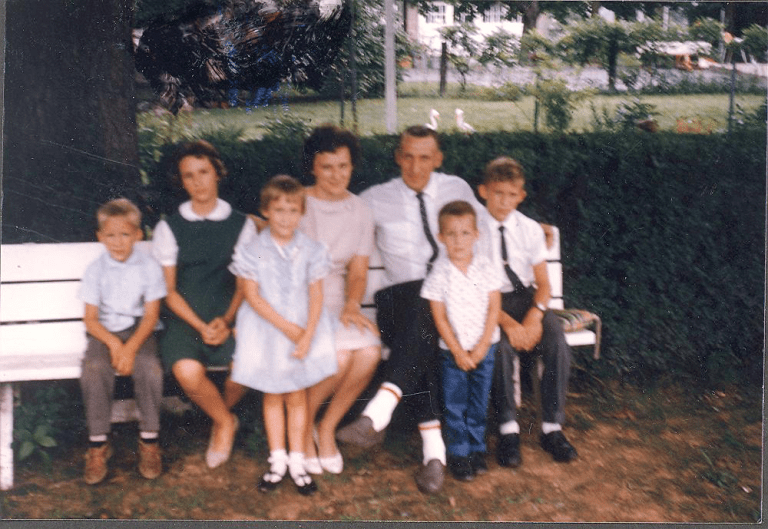
(The Richard Nelson Family)
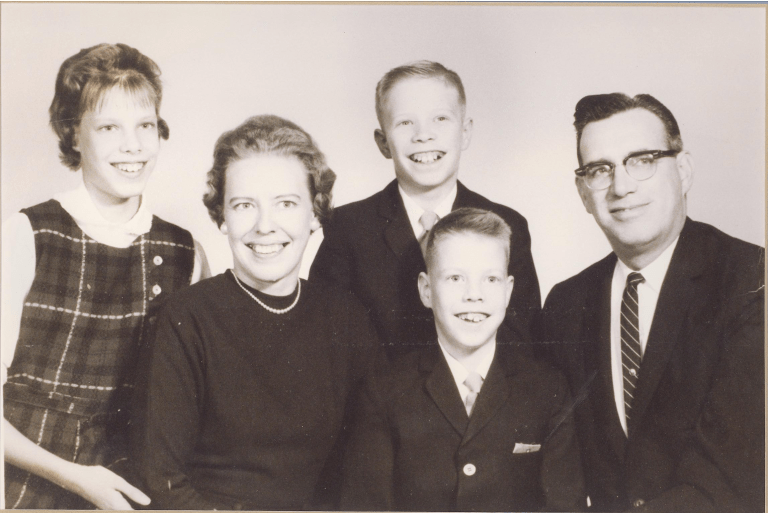 (Pastor George Elliot Family)

(Tim Lee, FCA Teacher & Principal)
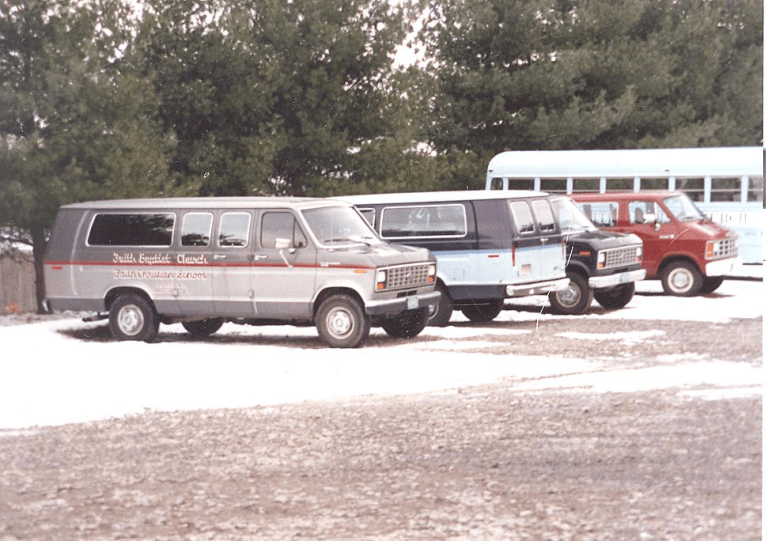
(Church Vans and Bus – circa 1979)
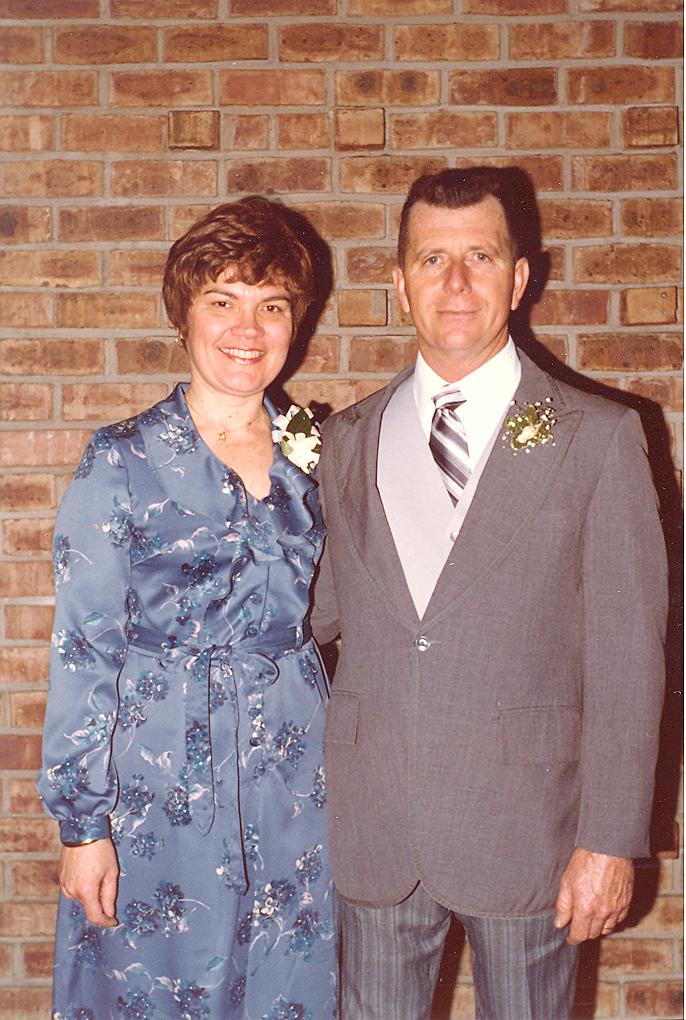
(Walt and Barbara Ivaniski)
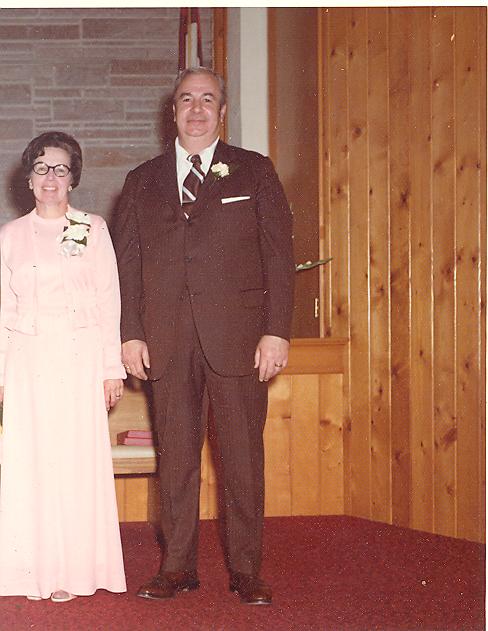
(Jean & Tom Davies)

(New Zealand Mission Trip Teens)
 (Pastor Ted Martens Family with Wendy Walters Martens- circa 1994)
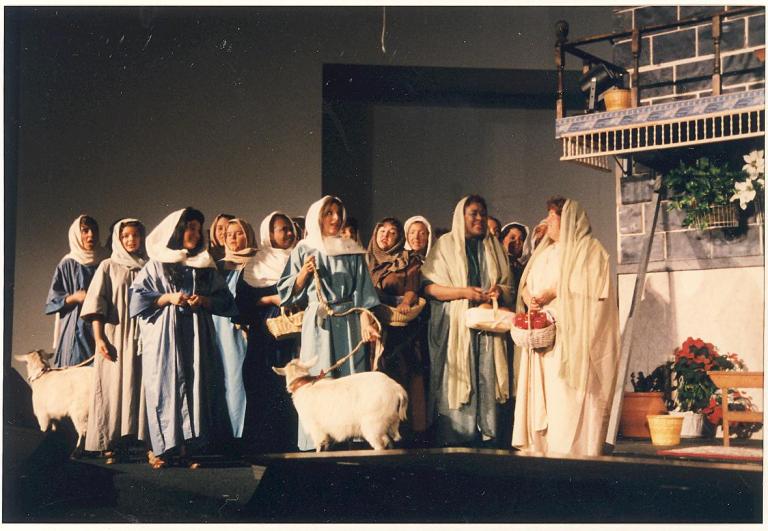
(Easter Musical Drama)

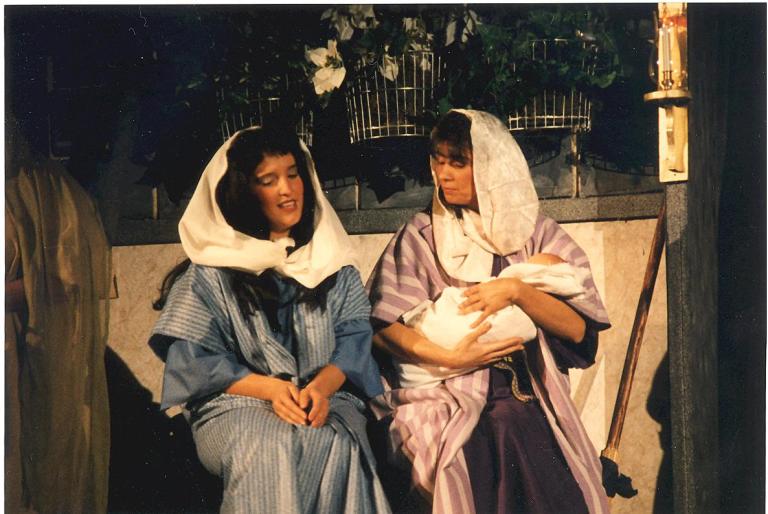
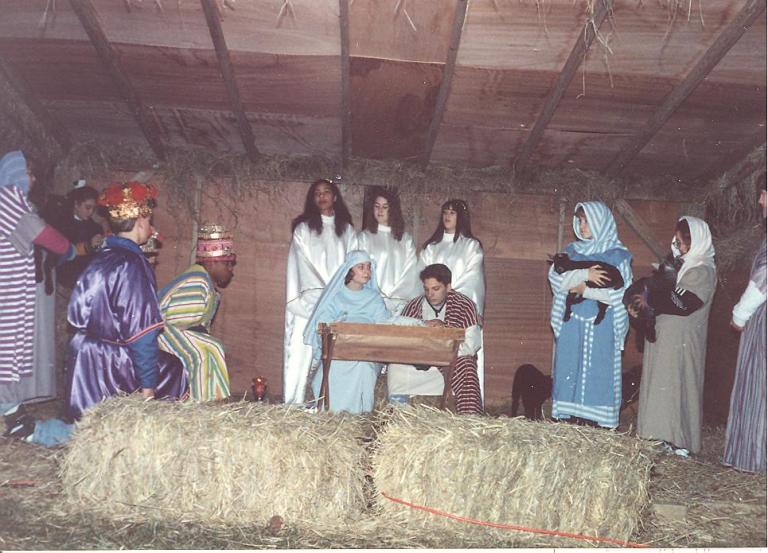
 (First Easter Musical Drama – Sam Barfell As Jesus)
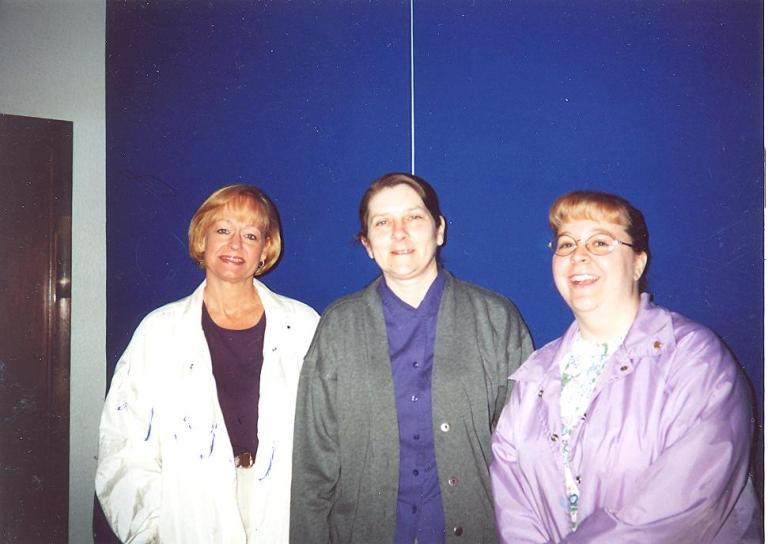 (Barbara Coleman , Cincy Gerner, & Bonnie Zarkar)
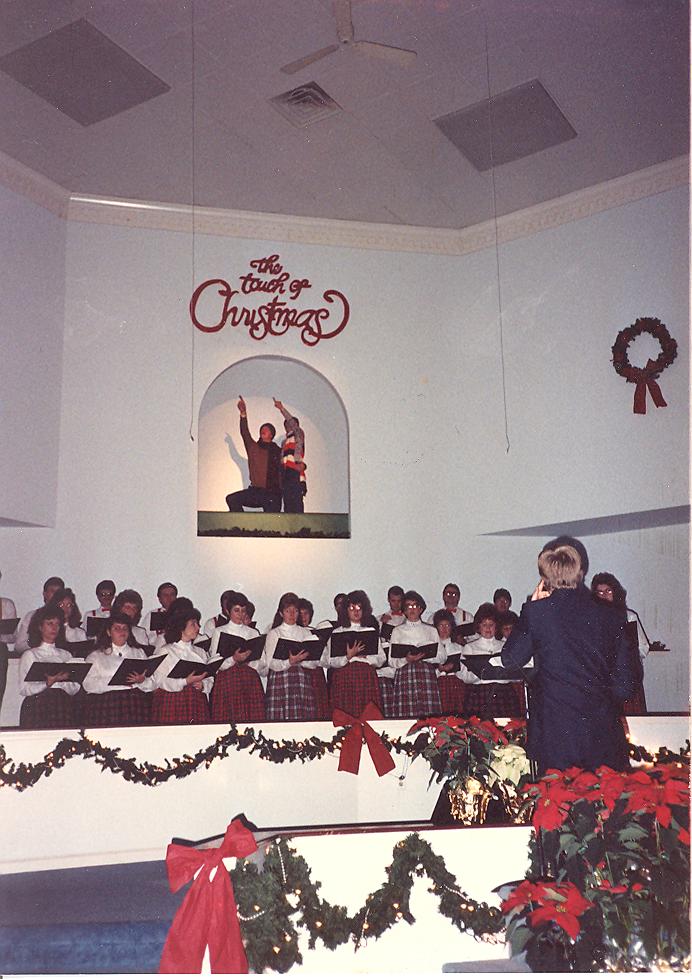
(Kevin Kaltreider Directing The Church Choir)
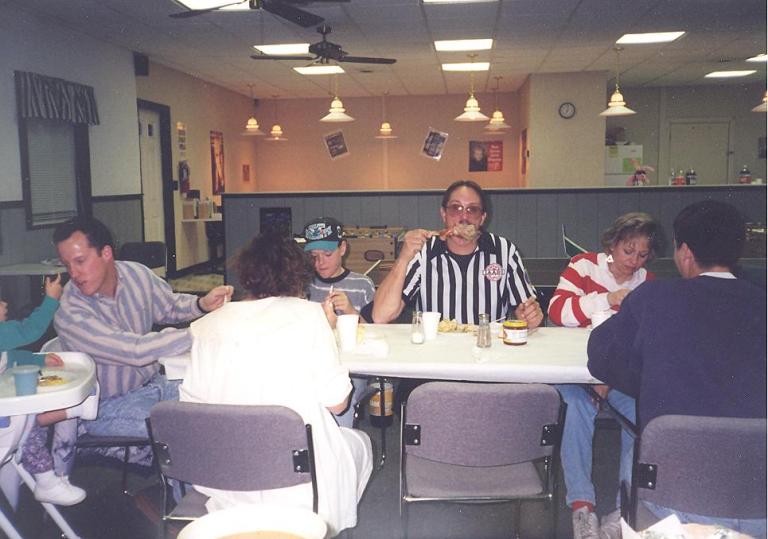
(Barb and John Coleman, with Darryl Hardin and ???)
(to be continued)
***********************
Here was one of the key motivations behind all the aggressive activities that marked Faith Baptist Church: “There is no impact if there is no exposure.” You can’t reach people who you never come to meet or know.
Addendum: The Lord Sends Some Friends To Help Us Out
Let me first of all say it was the 100s of regular members and friends of Faith Baptist Church that made Faith what it was. While there are some people who I personally came to know at important times in the life of the church who helped us on our way, it was those who regularly gave their time, treasure, and talents that had the greatest impact in ministry! I wish I could include all the names of the many individuals who supported, loved, worked, and gave — many come to mind constantly and even as I write the history of FBC/FCS!
The following people and events are only mentioned because I interacted with them and personally came to know them as a pastor and/or school administrator. Providentially, they had an interest in our ministry and are part of the history of FBC/FCS . . . .
A military officer at McGuire Air Force Base: The phone rings, and an officer at the Air Force Base asks if we would like to pick up 1000s of ice cream bars from their freezers. The story? A lady donated the ice cream bars to the base and they had a sudden falling out and demanded that they give the ice cream bars to a charity.
I have no idea how he got our name, but he asked if we would take them off their hands so that the situation they were facing could be quickly and easily resolved.
This all happened just before the VBS season. I responded — ABSOLUTELY — with no idea how we would transport them or store them.
I announced that if anyone had a home freezer and would like to store some for us — and eat as many as they wanted — we would deliver them to their home. Dwayne Adams offered to pick them up with his truck and trailer. We bought some dry ice to keep them cold on the road and surrounded them with blankets.
We used those 1000s of ice cream bars for the two weeks of VBS (also at FCA and any event we had throughout the next year). We handed them out like water – LOL!
Joe Devlin: I never met Joe before. He listened to our radio program and called me up and asked if I would meet with him and his son, Adam. Joe wanted some advice about his son’s education. Adam was considering pursuing his doctorate, and Joe asked me for advice about the wisdom of going down that educational path.
We had lunch at Golden Dawn, and as the conversation turned to his background, I asked him what his occupation was . . . . “Industrial Broker”. I had no idea what that was, but he explained that he went into buildings that were about to be demolished, replaced, or refurbished and sold out the contents — from its equipment down to the copper wire that composed the electrical system. I thought that was interesting.
Then he asked if I would show him our facility. We drove over to FBC, and I gave him the “grand tour.” When we were in the fellowship hall, Joe asked what our plans were for finishing off more of the building. I stated that I wanted to finish off the kitchen so that the fellowship hall was more useful.
Several months passed, and Joe called — “How much money do you have? I am selling out the equipment of Children’s Hospital in Philly.” Truth is, we didn’t have much money, but I said I think I can get around $800.00 together. “Well, come on down with your money next week, and let’s see what you can get.”
I don’t know where the $800 came from — but I drove down to Children’s Hospital with my money and my prayers. After just a few items (two commercial refrigerators, a huge butcher block countertop), I said, “I think that takes up the $800.” Joe looks at me and says — “Keep going and take anything else you want. I have carte blanche possession of it all.”
In the next several days, Dave Mc Cann and Ken Fort (and I imagine some of the young bucks at FCA) transported truckloads of stuff. White wall cabinets, stainless steel commercial base cabinets, whiteboards, stainless steel commercial tables, lockers, standing metal cabinets, exhaust fans, and all kinds of smaller items from the hospital’s kitchen. We cut up the long butcher block counter and used both the large and small sections on top of the base cabinets.
Most of the items were on the second floor of the hospital. We had to move the two large commercial refrigerators on a hand truck down two or three landings of stairs. The butcher block counter was too long and heavy to bring down the stairs. Ken Fort said that we could lower it out the opening above the loading dock, two stories high. Ken secured a rope to the building, leaned the butcher block against the opening, and made a large hoop that went around the butcher block. He said that when the butcher block was lifted up and pushed out, the rope would catch and tighten around the butcher block. I asked Ken, “Are you sure? Because there is a car just adjacent to the loading dock. I can only imagine that if it drops freefall and lands on its edge, that car will be flattened.” He assured me it would work. We tilted it out the window, and as it dropped, the rope grabbed the butcher block — it worked.
I believe that most of those cabinets, bases, tables, butcher block counters, and refrigerators are still in the kitchen to this day.
Dave Fiori Sr.:
Parking on Sunday mornings or for special events soon became a problem and a blessing. It only took about 30 cars to fill the paved marked parking space behind the church. After that, you had to park on the stone covered area or the grass behind it. On rainy days, we had “Faith Lake.” After the rain retention tanks (that’s another story) would fill, a lake developed and covered the playground area of the parking lot.
Our parking situation was a blessing for two reasons. First, we were blessed with the need for more parking. The opposite problem — few people and plenty of parking space — is the real affliction for any ministry. Second, many cars had to park up and down Kuser Road. I often thought about the many people who drove past on a Sunday morning who had to think about what the attraction was to attend FBC.
Mr. Fiori was a wealthy realtor in Bucks County, just across the river in the Levittown, Bensalem, and Pendell area. Again, he knew about FBC because he listened to our radio program. I never met him, but out of the blue, he called me and invited me to his offices right around the corner from Philadelphia Bible College (now Cairn University).
I tell the receptionist my name and that I have an appointment with Mr. Fiori. I am ushered into his office. He introduced himself as we shook hands. After some small talk, he asks if I would like to go on a drive — of course. He shared his background as we visited the various strip malls he owns — “I came from Italy, with only two nickels to rub together, and today I am a multi-millionaire. However, I have never met a millionaire who said they are happy in life, including myself.” He was a believer who realized that money cannot satisfy.
We drove through the campus of PBC as he explained the various ways he was able to help out the college, which gave him a lot of personal satisfaction and fulfillment. He attended a good Gospel-preaching church in Levittown. For a good while, he would come on Wednesday evenings to FBC. There are a good number of unusual stories that are probably worth telling, but I am trying to keep this the history of FBC.
Mr. Fiori did not like driving across the rocky parking lot — no one did. While we poured tons of gravel over and over on the surface to mitigate the potholes that just kept developing, it was only a matter of time before they reappeared in other places.
Mr. Fiori asked why we did not finish paving the area behind the already paved parking area. I told him that we had tried to see if that could be done, but the township refused to issue a permit to do that. The township did not want us to create additional impervious surface that would only increase the runoff to the storm drains and our neighbors.
Mr. Fiori stated that he was going to send a company over to dig down 2-3 feet of the parking area and then refill the area with coarse stone to provide a more stable surface. Then, the company would cover the surface with a smaller fill to provide a better surface.
That project made the parking area much more useful. Though it did not resolve the water problem or give us more usable spaces, it did relieve some of the unpleasantness of parking on site.
Sam Mothe & Pat Pavers: Our parking problem would find a better resolution by the work of Sam, one of our faithful and committed members.
Sam and Ann Lamothe lived right behind the church. Sam was retired from Exxon Oil and began working for Pat Pavers, which was located in the area. Both Sam and Ann worked at Pat Pavers. Sam asked if it would be okay for him to get a bid from Pat Pavers. He did, and it came in at around $150,000. However, we again struggled with getting a permit to expand the paved parking area. Somehow, a township official who was open to the idea was willing to give us a permit and perhaps Pat Pavers also helped out.
Now, how would we come up with $150,000. I told Sam that I’m not sure we could afford the cost — maybe $100,000. Sam said it would all work out.
There was more to the project than just paving more of the stoned area. We needed to resolve “Faith Lake.” However, “Water” was no longer considered a “common hazard” in New Jersey. “Water” was your responsibility to control, and if it ran off of your property and caused damage to others, you were liable now.
The project required a large concrete drain pipe to run across the length of the property, through the side yard of the house on Glendon Road which was alongside our property line, down Glendon for blocks, and to the main storm drain connection. That meant digging deep on both the church property, through the side yard of a residential property, and down Glendon Road. That was the only way to connect to a township storm drain.
Notably, and by God’s unseen hand, we had purchased two large farms and 11 other properties (by 2016) for pastoral parsonages and inexpensive faculty rental housing as desired). The residential Glendon house was one of them.
I remember watching the excavation — “steam shovels”, bulldozer, concrete piping, drains, and grates. I was thinking — this has to end up costing a lot of $$$$ and hoping that the bill didn’t get much above $100,000. The leftover dirt was used to create a grassy berm around the back property area so that the water was removed through the two large grated drains on the left and right sides of the parking lot.
I don’t know what all took place, but I know that Sam made it all happen! The final cost was just under $100,000. As his obituary states . . . “He was a devout Christian and active member of Faith Baptist Church in Hamilton” and MORE! Sam was always there to help and volunteered his time and money to help throughout his retirement from Exxon.
* We were an aggressive local church ministry in Hamilton, New Jersey. God gave us this small area of the world to reach out to with the Gospel!
** One of my aims was to make sure that the children who attended Faith Baptist had such good and great memories of what a church is, that if they ever face hard days in life, they will remember their years at Faith Baptist and run to a Bible-believing church for help!
*** The weekly church bulletin may be one of the most effective means of communication that has been set aside by many churches today. If done right, with fresh, interesting, and varied information, it makes a real difference in awareness, compassion, fellowship, and church faithfulness.
Additional Notes From Our Past Members & Friends:
The Nelson’s returned to Broome County, NY after leaving NJ. Dick started an electrical/lighting company here in Vestal, NY called Nelson Lamplighters. They served at Calvary Baptist Tabernacle (CalTab) for many years and then returned to First Baptist of Maine, NY which was the church in which Barb grew up. She still teaches a Ladies Sunday School class there (Dick passed away after a battle with dementia). — Evelyn Williams (my pastor’s daughter when we lived in Albay, Ohio)
— Cathy Long Dudderar
FBC very first Pep Band 1972. Won the regional and then moved to championship playoffs at WOL Island. Played for the basketball playoffs as well as the Pep Band Playoffs. WE WON!!!
— Terri Von Schoick
It was the Snow Camp trip in 1983 that I went along on the bus, with Yvonne Plakiotis driving. It was that weekend when the Lord spoke to me and planted the seed that I needed to go to Word of Life. At my age, I laughed (maybe like Sarah did), so I didn’t tell anyone. The desire kept getting stronger until I finally had to let it out. I was in the class of 1987. It was a wonderful experience, and I met someone who is now one of my dear friends. We shared a room in Sicamac cabin. I had the privilege of going on two of the WOLBI tours, “America I Still Can Hear Your Song” and “Revelation.” I always said that it was the best year of my life.
— Marion Dempsey

Yvonne and Marion were two mainstays of the ministry over all the years they were there. They were faithful members and constant encouragers. This picture of both of them brings back so many great memories! — Ted Martens
 RhetoricAndHomiletics.Org